
Last updated November 15, 2026
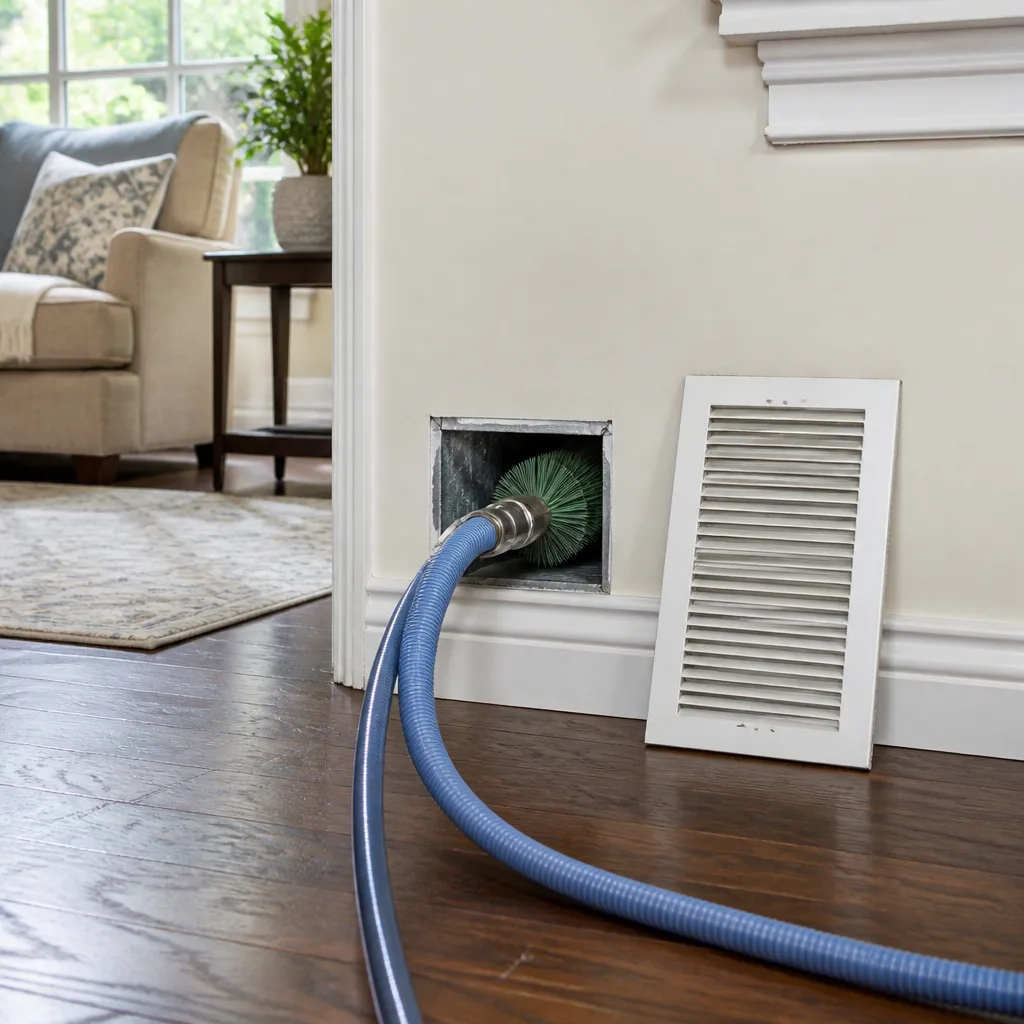 Whole-home duct cleaning
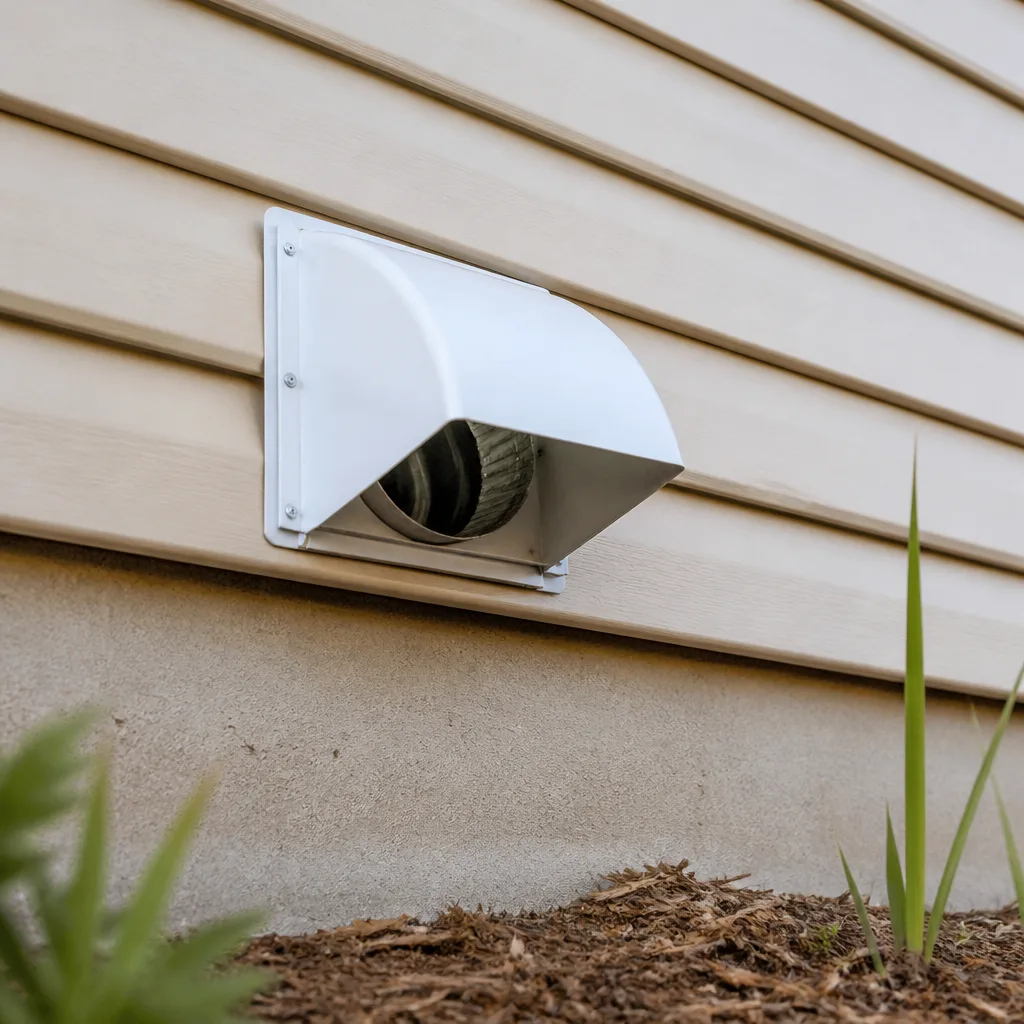 Dryer vent cleaning
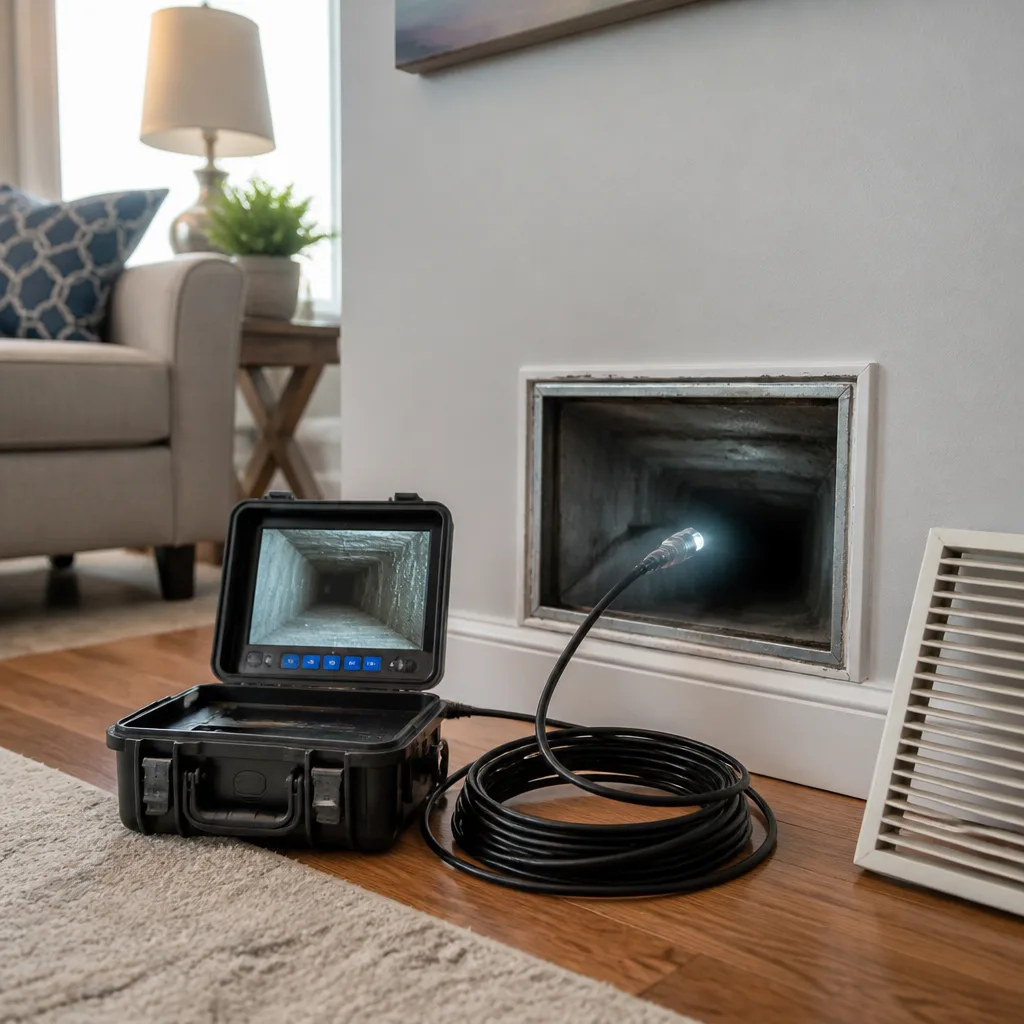 Camera inspection
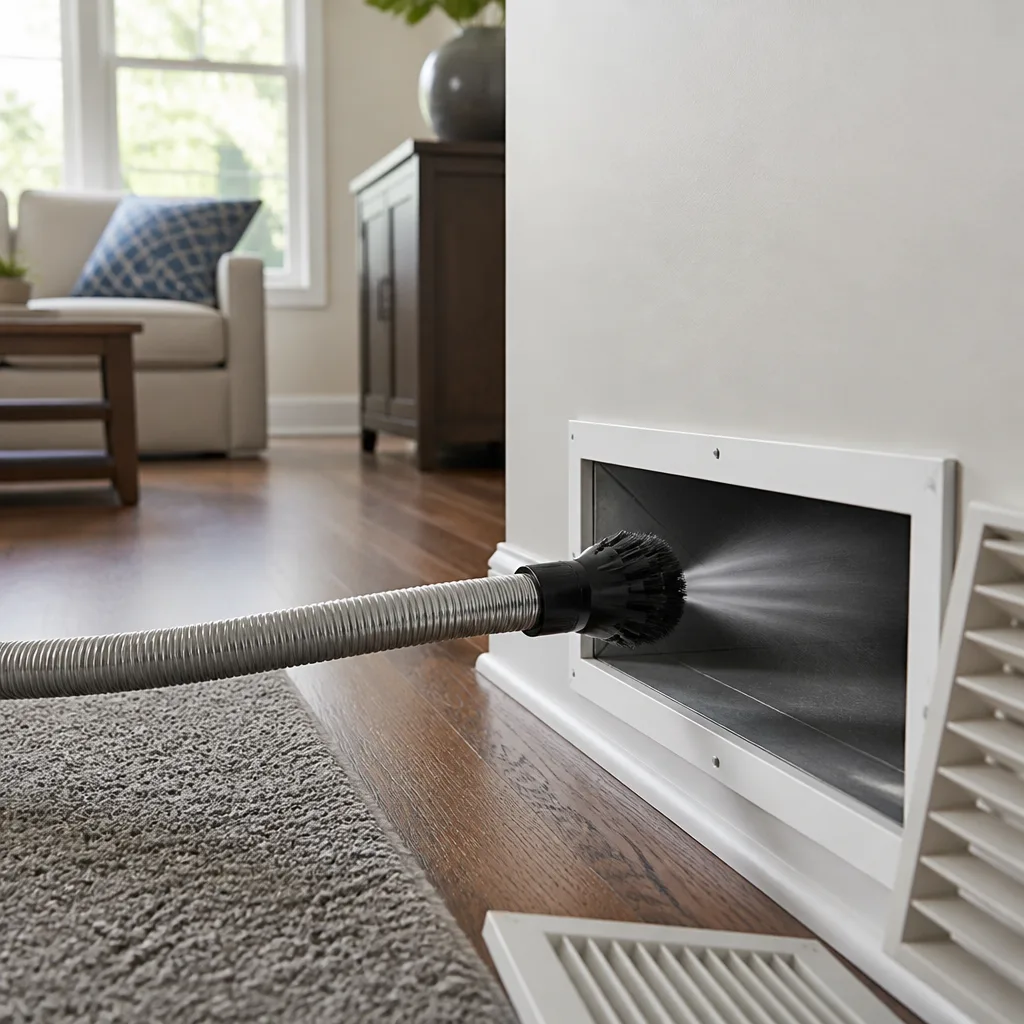 Sanitizing & deodorizing
Whole-system duct and dryer vent check with before-and-after photos - you see exactly what came out of your vents
That "$99 whole-house special" is a bait ad - the real number appears once they are in your hallway, or the "clean" is a shop-vac at the register. We photograph the inside of your ducts before and after instead.
DIY vs Professional Air Duct Cleaning: The Lynn Homeowner’s Decision Guide
A shop-vac pulls roughly 60 to 80 cubic feet per minute of air. A professional duct cleaning rig pulls thousands. That gap is the entire debate, and it’s not a marketing claim. It’s why one machine lifts contamination off the duct wall and carries it out of the house, while the other mostly pushes it further down the line. Most homeowners in Lynn frame this decision as a budget question. It’s really a physics question, and once you understand the mechanics, the choice for any given home becomes obvious. This guide explains the equipment, what DIY can honestly accomplish, when it’s genuinely inadvisable, and how to decide for your own house.
Quick Answer
Professional air duct cleaning is worth it when your ducts carry years of accumulated debris, when anyone in the home has allergies or respiratory sensitivity, when you’ve had renovation dust, or when the ductwork itself needs inspection or repair. DIY cleaning is a reasonable between-service task for keeping register grilles and floor vents clear and changing filters on schedule. It cannot achieve source removal, because consumer equipment doesn’t generate the negative pressure required to pull adhered particulate off the duct walls and contain it.
Styles & brands we work with
- Whole-home duct cleaning
- Dryer vent cleaning
- Camera inspection
- Sanitizing & deodorizing
Table of Contents
- The Physics of Source Removal: Why Suction Matters
- What DIY Cleaning Can Legitimately Accomplish
- What DIY Cleaning Cannot Do (And Why)
- Lynn Housing Stock: Where DIY Gets Risky
- The Hidden Cost of Ineffective Cleaning
- Your Decision Matrix: DIY vs Professional
- What Professional Equipment Actually Looks Like
- When Cleaning Turns Into Repair
The Physics of Source Removal: Why Suction Matters
Source removal means taking the contamination out of the duct system and putting it in a HEPA-filtered containment unit, not just loosening it. Two forces have to be overcome. First, the adhesion between fine particulate and the duct wall – dust, skin cells, pet dander and lint build a film that clings electrostatically and mechanically to galvanized steel and flex duct lining. Second, the airflow resistance of the duct run itself, which climbs as the duct gets longer, narrower, and more heavily contaminated.
Professional rigs address both with contact agitation and high-volume negative pressure. A rotary brush system like Rotobrush physically scours the duct wall while a vacuum with a HEPA stage like a Nikro unit pulls the loosened material into containment. The airflow has to be strong enough that the moment the debris releases from the wall, air carries it to the vacuum instead of letting it settle 10 feet downstream. In our experience, that’s where consumer equipment falls short: the airflow is too low to transport fine particulate through the run, so it drops out of suspension and re-settles.
What CFM Actually Does
CFM, cubic feet per minute, is the volume of air a machine moves. A household shop-vac in the 60 to 80 CFM rangeworks fine on a 12-foot hose pulling sawdust off a subfloor. It can’t overcome the pressure drop of a 30-foot main trunk with a run of 6-inch round branch ducts and multiple elbows. The machine bogs down, airflow collapses, and what you’re left with is the wand moving across the bottom of the duct while the top and sides stay coated. Professional truck-mounted and high-capacity portable units move orders of magnitude more air than that and are designed to hold negative pressure against a full duct system.
- Agitation matters as much as suction: brushes, whips and air jets break the adhesion film
- Containment matters as much as extraction: without a HEPA stage and negative pressure, fine debris goes into your living space
- Transport velocity matters most: the airspeed inside the duct has to carry debris to the vacuum, not just into suspension
That last point is the one homeowners miss. A machine can be powerful and still fail the job if the operating pressure drops the moment it’s connected to a real duct system. The reason professional rigs are configured to keep pressure up across the whole run is simple: it’s the only way source removal actually happens.
What DIY Cleaning Can Legitimately Accomplish
DIY has real value, just not where most people aim it. The tasks that genuinely help are the ones at the endpoints of the system – the parts you can reach without a ladder, a camera and a containment unit. Done on a regular schedule, endpoint maintenance reduces the load on the whole system and makes the eventual professional cleaning more effective.
- Register and grille cleaning. Unscrew floor and wall registers, vacuum the slats and the visible boot, and wipe down the surrounding trim. This is the surface dust homeowners actually see. Monthly to seasonally is plenty.
- Filter changes on schedule. A clean filter is the largest single factor in what reaches the blower and coil. Follow the filter manufacturer’s interval, not a seasonal guess.
- Reachable boot vacuuming. The short metal section between the register and the start of the run can be vacuumed with a crevice tool. Don’t push the tool far enough to dislodge connections.
- Return grille cleaning. Returns pull the most dust. Cleaning return grilles reduces what the system cycles back into the rooms.
- Clear the immediate area around the air handler. Make sure nothing leans against it and that the return path is unobstructed.
None of that is a substitute for professional work, and it isn’t meant to be. Think of it as brushing your teeth between dental visits: useful, inexpensive, and not a cleaning.
What DIY Cleaning Cannot Do (And Why)
Here’s what a homeowner with a shop-vac and a brush kit cannot do, and it comes down to equipment limits rather than ability:
- Reach the full run. Consumer hoses are short. The main trunk, the branch takeoffs and the elbows at the far end of the system are simply out of reach.
- Maintain negative pressure across a whole system. A single small vacuum connected to one register can’t hold the whole duct network below room pressure, so anything loosened elsewhere drifts out into the conditioned space.
- Contain fine particulate. Shop-vac filters catch the visible stuff and pass the respirable fraction. Professional HEPA and Abatement Technologies filtration stages capture what a bag filter won’t.
- Agitate the duct surface. Whips and rotary brushes rotate at designed speeds against the duct wall; a hand brush swiped along the bottom does not replicate that.
- See what’s actually going on. Camera inspection, airflow measurement and pressure diagnostics are how a professional decides whether the issue is contamination, a disconnected joint, crushed flex or a failing blower. DIY cleaning skips diagnosis entirely.
It’s not that DIY cleaning is dangerous or useless. It’s that it’s aimed at the visible ten percent of the system, while the problems that cause dust buildup, airflow loss and allergy flare-ups live in the other ninety.
Lynn Housing Stock: Where DIY Gets Risky
Lynn is an old city, and its housing stock is a big part of why the DIY call is more delicate here than in a newer suburb. Homes built in the early-to-mid twentieth century frequently still have original galvanized sheet metal ductwork – sometimes retrofitted with flex duct runs to new additions, sometimes with all of it in a crawlspace or unfinished basement. That combination creates a few specific hazards for a homeowner with a brush kit and a shop-vac.
Original galvanized ductwork
Old galv has seams, crimped joints and sometimes barely-there hangers. A brush run too aggressively, or pulled through at the wrong angle, can pop a joint or tear a seam that was already marginal. Once a joint opens, the system leaks into the crawlspace or wall cavity, and every room downstream loses airflow. Professional brushes are matched to duct material and run at a controlled speed; hand-held brushes are not.
Flex duct collapse
Flex duct is a common retrofit in older Lynn homes where a new room was added or a system was extended. It looks robust and isn’t. Suction from a strong shop-vac can partially collapse a section of flex, and once the inner liner crimps, you can’t see the problem from the register and you can’t straighten it out without opening the run. A professional rig controls and monitors pressure at the connection so the duct doesn’t pull in on itself.
Mixed-material systems
Many Lynn houses have sheet metal mains feeding flex branches, or metal boots into flex runs into converted attics. What works for sheet metal is harmful to flex, and vice versa. Diagnosing the system before cleaning it matters here more than in newer construction with uniform materials.
Dense residential layout
Homes close together in dense Lynn neighborhoods often share tight return paths through wall cavities and closets. Blowing debris into a shared cavity is not a neutral mistake – it can migrate into adjacent rooms. Containment and negative pressure exist to prevent exactly that.
The Hidden Cost of Ineffective Cleaning
Ineffective cleaning has a cost that doesn’t show up on the invoice. When DIY or low-grade cleaning redistributes dust instead of removing it, that dust ends up somewhere specific: on the blower wheel, the evaporator coil, the secondary heat exchanger and the return plenum. All are downstream of the ducts. All are harder and more expensive to clean than the ducts themselves.
- Blower wheel. Dust accumulates unevenly, the wheel goes out of balance, the motor works harder, bearings wear faster
- Evaporator coil. A dust film on the coil reduces heat exchange, raises energy use, and can eventually cause freezing in cooling season
- Secondary heat exchanger (high-efficiency furnaces). Contamination on the outside reduces efficiency and can lead to nuisance shutdowns
- Return plenum and filter housing. Dust settling here recirculates every time the fan runs
That’s the trade nobody wants to talk about in the DIY vs professional debate. Saving on cleaning can create an HVAC service call that costs more than the cleaning would have. We’re not saying every DIY attempt damages an HVAC system – we’re saying the mechanism exists and it’s more common than homeowners expect.
The other hidden cost is the false confidence. A homeowner who’s cleaned their registers may not schedule professional cleaning for years, not because the ducts are clean but because they believe they are. Meanwhile, decades of accumulation sit in the trunk and branch runs. Regular maintenance is fine. Assuming maintenance is a substitute is not.
Your Decision Matrix: DIY vs Professional
Here’s how we’d frame the decision for a Lynn homeowner. None of these factors decides on its own – you’re weighing them together. If you check two or more on the “professional” side, it’s time to schedule.
Go with DIY maintenance if:
- Your home was built in the last 15 to 20 years with sealed, uniform ductwork
- The ducts were professionally cleaned within the last five years
- No one in the home has respiratory sensitivity or allergy symptoms that correlate with HVAC season
- Filters are on schedule and airflow at every register feels strong
- You’re never noticing dust streaks around outlets or on return grilles after a week
- No pets, no recent renovation, no water events in the crawlspace
Go with professional service if:
- Your Lynn home is older, with original galvanized ductwork or a mix of metal and flex
- It’s been more than five years since professional cleaning, or you don’t know the history
- Anyone in the home has asthma, seasonal allergies or other respiratory sensitivity
- You’ve recently finished renovation or drywall work
- Airflow at some registers is noticeably weaker than others
- Dust returns fast after cleaning, or you notice fine dust on horizontal surfaces shortly after changing the filter
- There’s visible debris, nesting material or pest evidence at a register
- You’re a small-building property manager with a tenant complaint history
For anyone on the professional side of that ledger, air duct cleaning is the straightforward starting point. The assessment comes first – the cleaning plan should be built around what the system actually needs.
What Professional Equipment Actually Looks Like
Worth knowing what you’re comparing to, because “professional cleaning” gets used loosely. Real equipment setups share a few traits: high airflow, contact agitation, and containment. Our technicians have up to 13 years of experience with this setup, and the configuration below is what separates a source-removal clean from a surface pass.
- Rotary brush systems (Rotobrush). Matched to duct material, run at controlled speed, and driven through the full run rather than hand-fed from the register
- High-capacity HEPA vacuum rigs (Nikro). Multi-stage filtration that catches the respirable fraction, not just visible debris
- Abatement Technologies air filtration units. Placed in the work area to hold negative pressure and keep the living space clean during the job
- Camera inspection and airflow measurement. Confirms what’s actually in the run before and after
- Finishing products (Guardsman). Post-clean sanitizing and protective finishing where appropriate
If an estimate doesn’t include camera work, containment and a machine larger than a shop-vac, it’s a different category of service than source removal. It may cost less. It also isn’t the same job.
When Cleaning Turns Into Repair
Cleaning and repair belong in the same conversation, which is why we don’t treat them as separate service categories. A proper duct cleaning sometimes turns up a problem that can’t be cleaned around: a disconnected joint in a crawlspace, a crushed flex section, a seam separated by age, a boot that’s pulled away from the subfloor. Handing those off to a second contractor is a real cost to the homeowner in time, scheduling and price.
Air duct repair is part of the same visit with us – sealing, patching and restoring compromised ductwork while the system is already accessed. In older Lynn homes this comes up more often than homeowners expect, because equipment access during cleaning is the same access needed for repair. Doing both at once is cheaper and cleaner than doing one, discovering the other, and starting over.
The same applies to a related but separate system in the house: your dryer vent. dryer vent cleaning addresses one of the leading causes of residential house fires. It’s often skipped, or tacked on as an upsell by companies that consider it optional. It isn’t. When a technician is already set up for duct cleaning, checking and clearing the dryer vent is a small additional step with a real safety outcome.
If you’re not sure whether your Lynn home needs cleaning, repair, or both, call us. The assessment is what tells you which service applies.
Common Mistakes to Avoid
- Treating a shop-vac as a duct cleaner. Shop-vacs are useful inside the register boot; they’re not designed for the duct run. Forcing one into a flex duct can crush the liner and cut the actual cleaning short.
- Cleaning ducts but ignoring the blower and coil. The ducts aren’t isolated. Dust accumulates on the moving parts and heat-exchange surfaces too, and a duct clean that skips those leaves half the problem in place.
- Trusting a quote that has no containment step. If a company isn’t setting up negative pressure and HEPA filtration, dust goes into your living space. That’s the opposite of what you’re paying for.
- Hiring on price alone, without a camera inspection. Any Lynn duct job should start with seeing what’s actually in the system. Cleaning without diagnosing risks damaging old ductwork or missing a repair that’s the real cause of the airflow problem.
- Assuming newer homes don’t need cleaning. Ten to fifteen years of typical use and a couple of renovation projects can accumulate meaningful debris in a system that was uniform and well-sealed when new.
- Skipping the dryer vent because the ducts are getting done. Dryer vent cleaning is a fire-safety service, not an optional add-on. It should be checked on a regular basis regardless of duct cleaning.
- Leaving open joints and separated seams after cleaning. A joint that pops during cleaning, or was already open, has to be sealed. Otherwise every room downstream leaks and the system can’t hold pressure the way it’s designed to.
See the difference
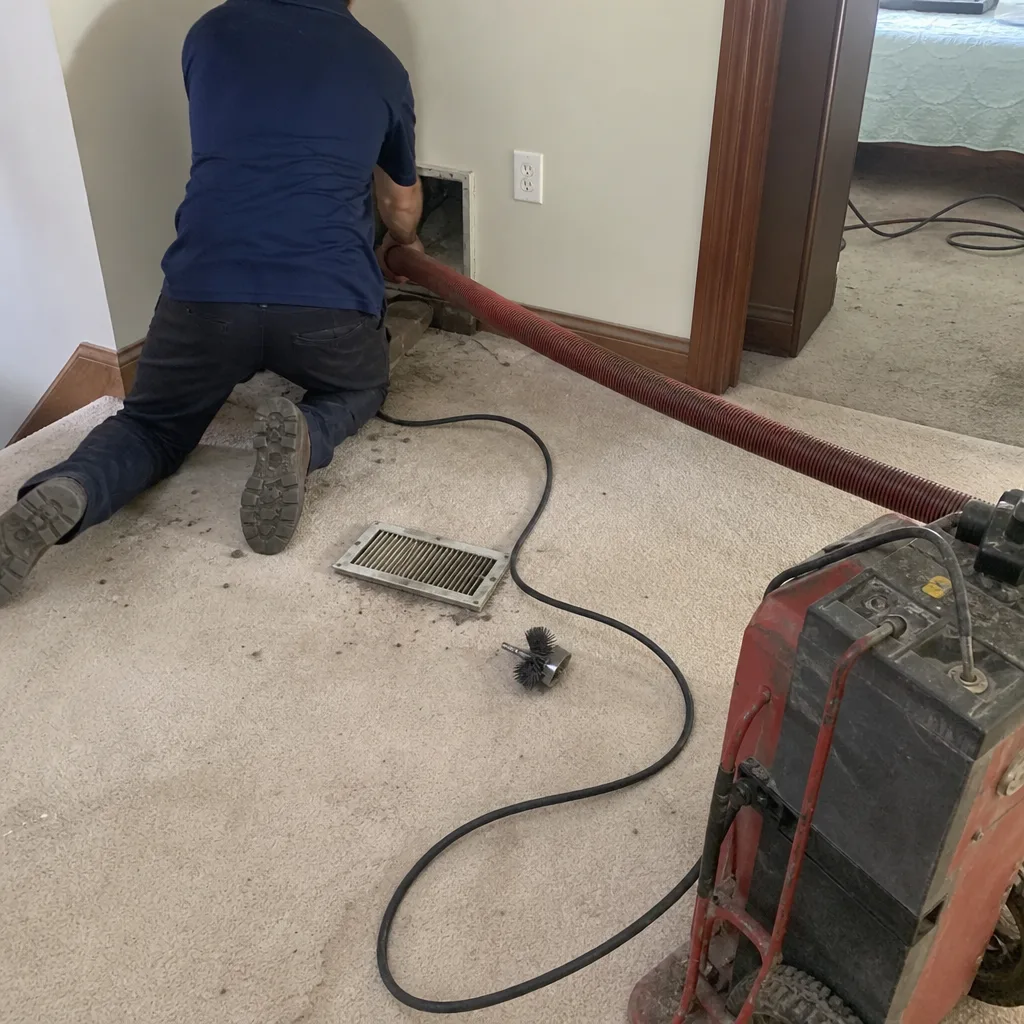 Before
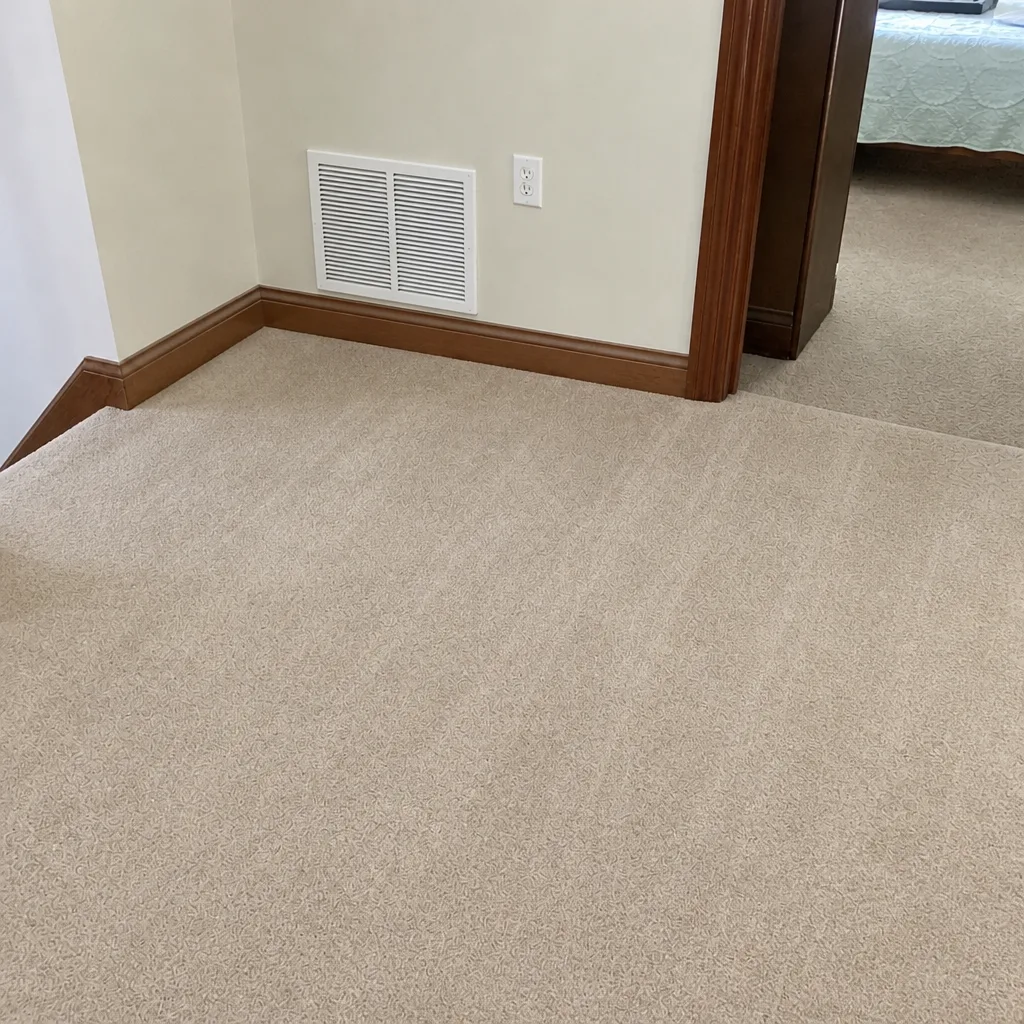 After
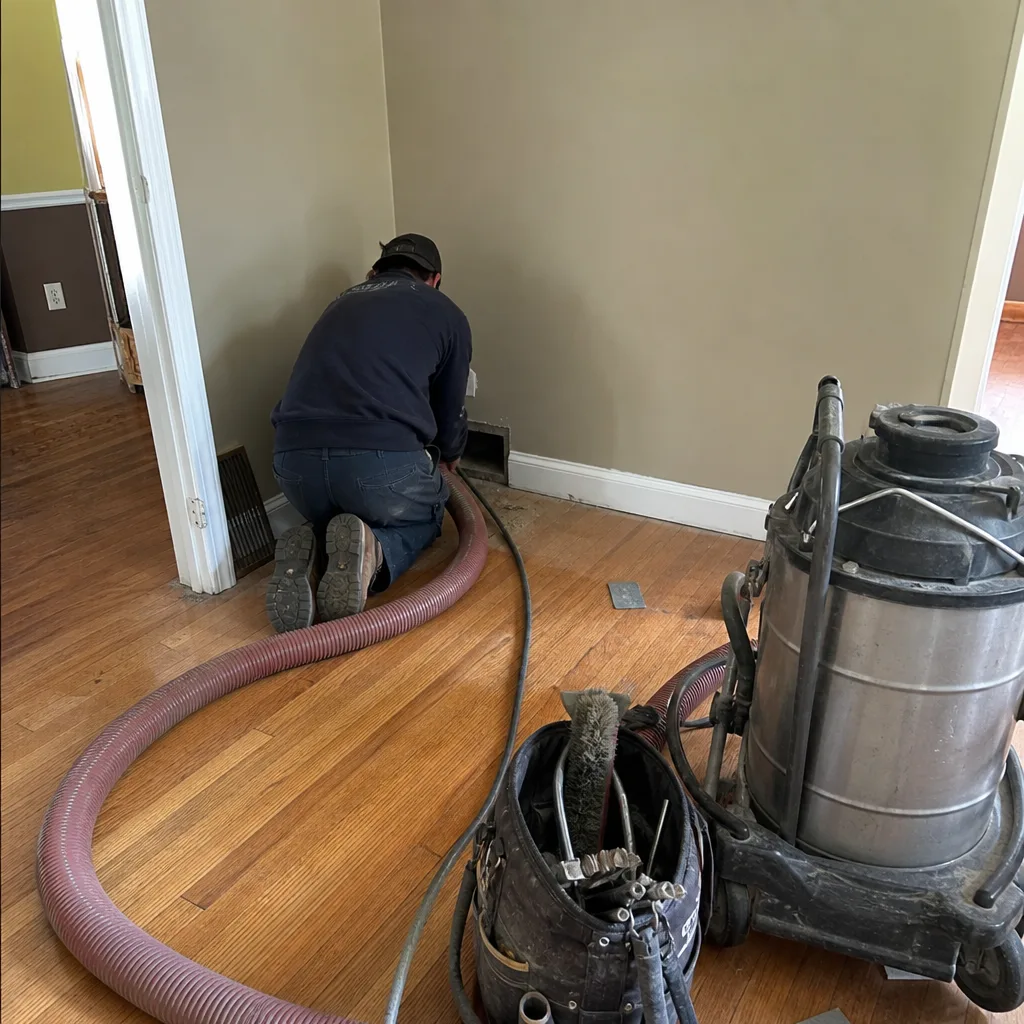 Before
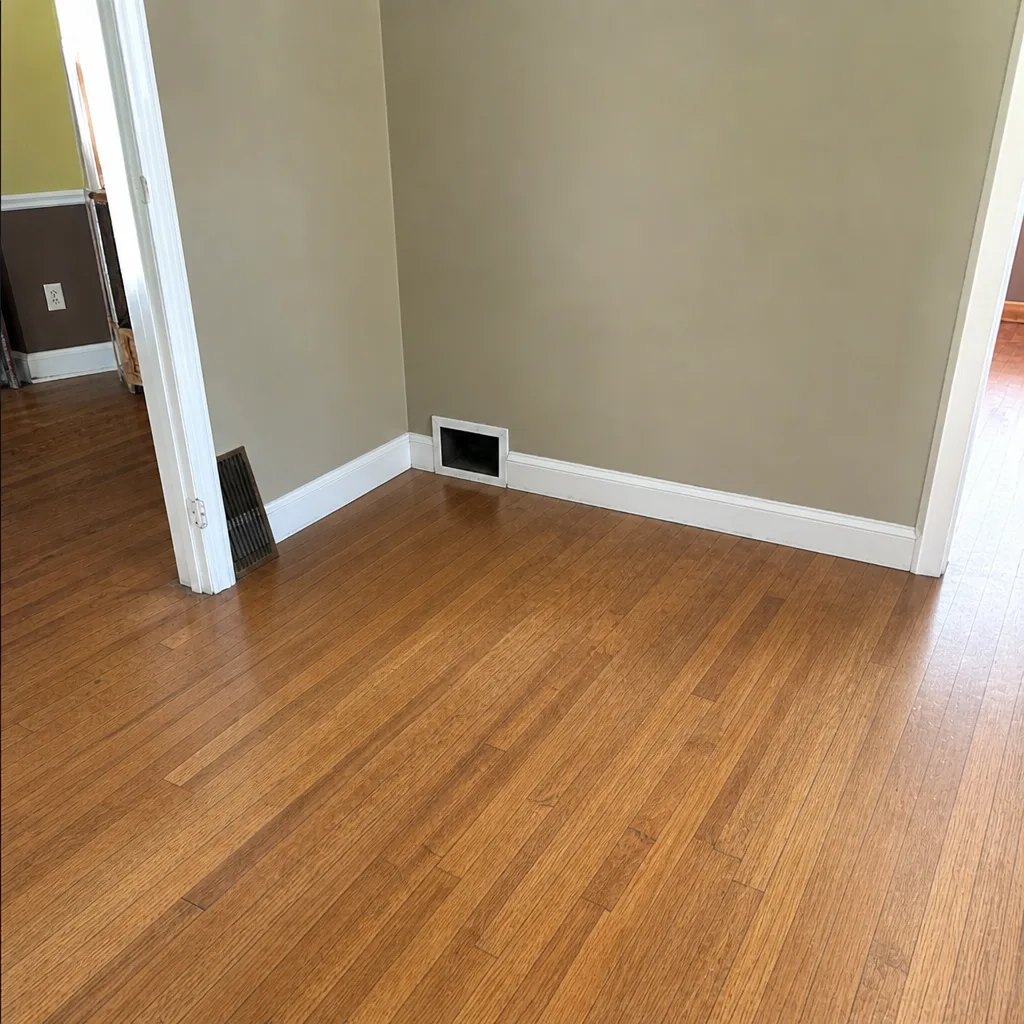 After
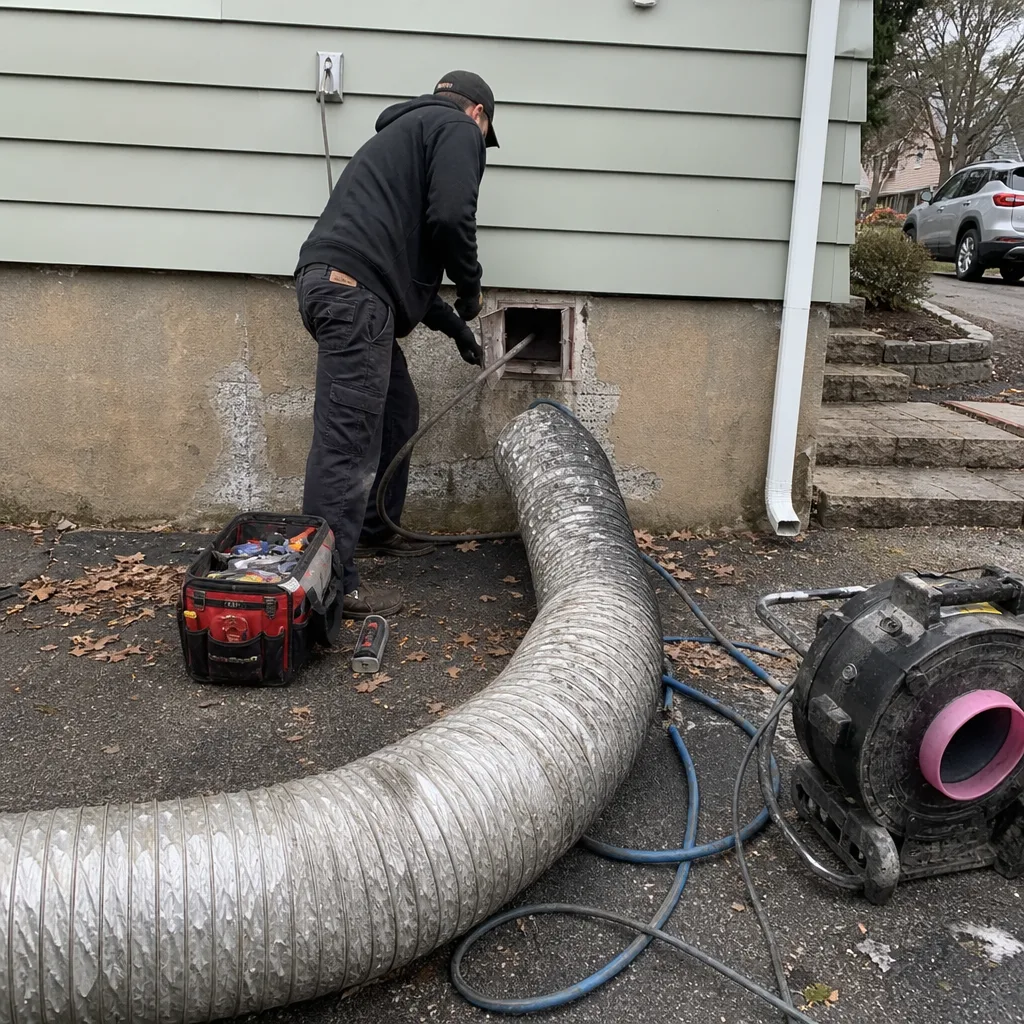 Before
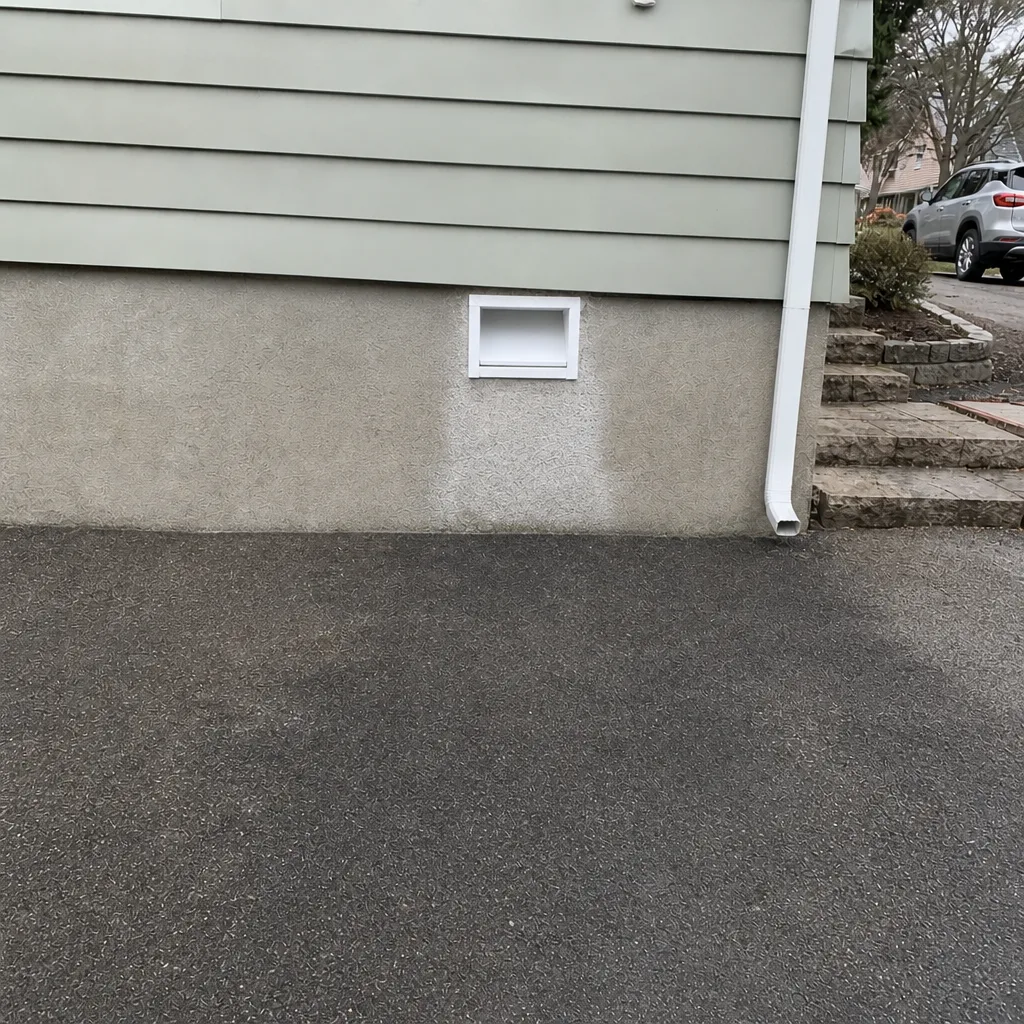 After
When to Call a Professional
Call a professional if your ducts haven’t been professionally cleaned in five years or more, if anyone in the home has allergies or asthma that tracks with HVAC season, if you’ve had renovation dust, if some registers are noticeably weaker than others, or if you own an older Lynn home with original galvanized or mixed-metal-and-flex ductwork. Those are the conditions where DIY maintenance isn’t the answer, and where the equipment gap stops being a technicality.
Duct Cleaning Lynn offers free estimates in Lynn. We’ll assess the system, show you what we find, and give you a written estimate before any work begins – one flat price per system, agreed in advance, with before-and-after photos of your own ducts so you can see exactly what was removed. Call (888) 392-6109. We answer 24/7. Fast dispatch from 7am to 7pm, Sunday through Friday. You can also read more about how we serve the area on our Lynn page.
Frequently Asked Questions
Yes, for endpoint maintenance. Cleaning register grilles, wiping return grilles, changing filters on schedule and vacuuming the reachable boot reduce the load on the system and make professional cleaning more effective. DIY is a between-service task, not a substitute for source removal on the run.
Pricing is set per job by a written estimate after we see the system – home size, duct layout, number of runs, accessibility and whether repair is needed all factor in. We give you one flat price per system, agreed before work starts, with no per-vent pricing and no teaser coupon that changes once the technician is on site. Call (888) 392-6109 for a free estimate on your home.
Because they’re usually a different job. A low quote often means no camera inspection, no containment or HEPA filtration, and a machine closer to a shop-vac than a professional rig. That means debris gets loosened but not extracted – it re-settles in the trunk, or ends up on the blower and coil. The job you want has a documented before-and-after. Ask to see the equipment. Call (888) 392-6109 if you’d like an estimate from us to compare.
Ask for before-and-after photos of your own ducts, taken from inside the run. A camera inspection is standard for us on every job – it’s how we confirm what was there before cleaning and what’s there after. If a company can’t show you photos, that’s your answer.
Most homes need professional cleaning every five to seven years, sooner after renovation or if you notice fast dust return, weak airflow or allergy symptoms that correlate with the HVAC season. Between-service tasks are ongoing. Dryer vent cleaning is a separate schedule based on dryer usage and lint load, and shouldn’t wait for a full duct clean.
It can. Old galvanized seams can pop under aggressive brushing, and flex duct can partially collapse under too much suction. In older Lynn homes with mixed sheet metal and flex systems, the risk is higher because the wrong method for one section is the wrong method the whole run. Professional brushes are matched to material and run at controlled speed for exactly this reason.
The Bottom Line
The DIY vs professional duct cleaning decision comes down to what removal actually requires. Endpoint maintenance – registers, filters – is real work with real value, and worth doing regularly. Source removal requires high airflow, contact agitation and containment, and that’s a category consumer equipment doesn’t operate in. For a newer Lynn home with clean history, DIY maintenance is a sensible baseline. For older Lynn homes with original galvanized or mixed ductwork, for households with allergy or respiratory sensitivity, and for anyone overdue on professional cleaning, the equipment gap stops being theoretical. If you’re on the fence, get the assessment. One flat price per system, agreed before work starts, and before-and-after photos so you can verify it. For duct cleaning in Lynn, call (888) 392-6109 to schedule your free estimate. We answer 24/7. Fast dispatch from 7am to 7pm, Sunday through Friday.
Written by the team at Duct Cleaning Lynn.