
Last updated November 15, 2026
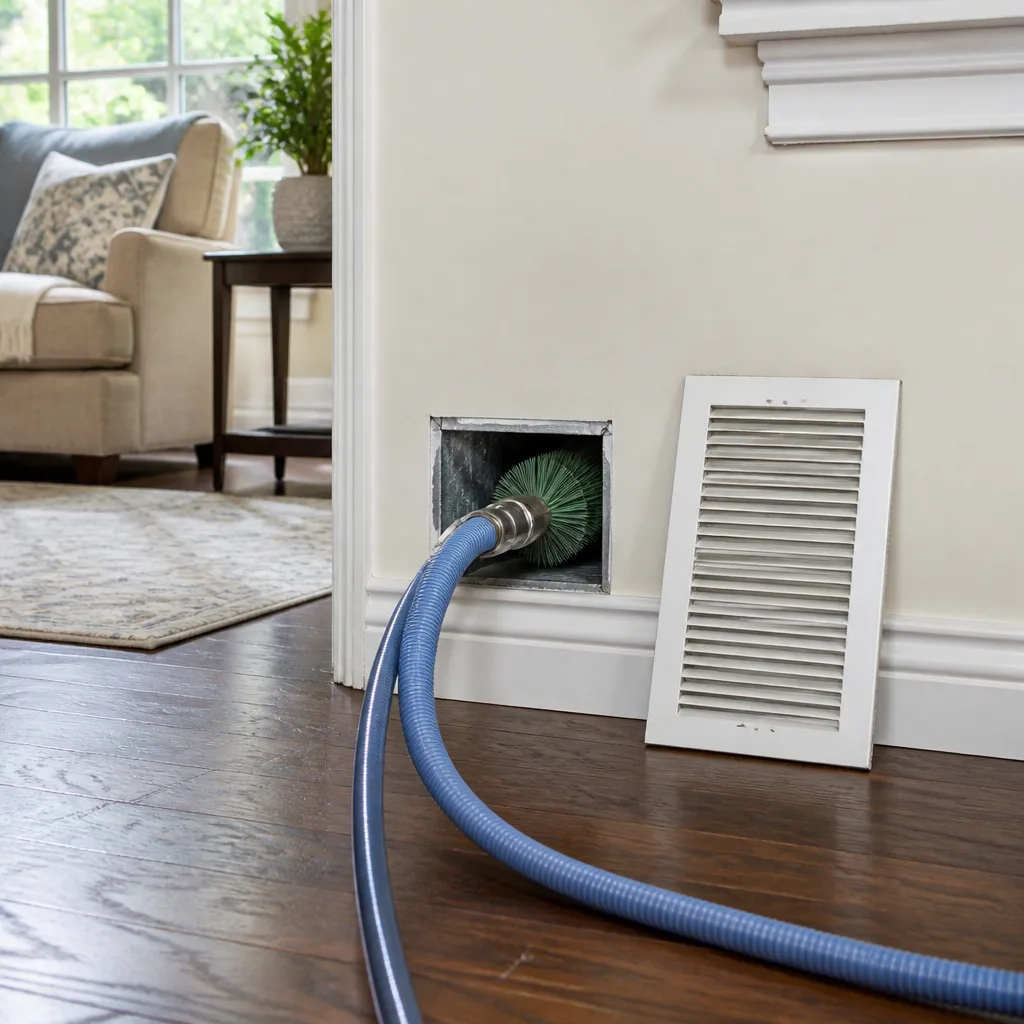 Whole-home duct cleaning
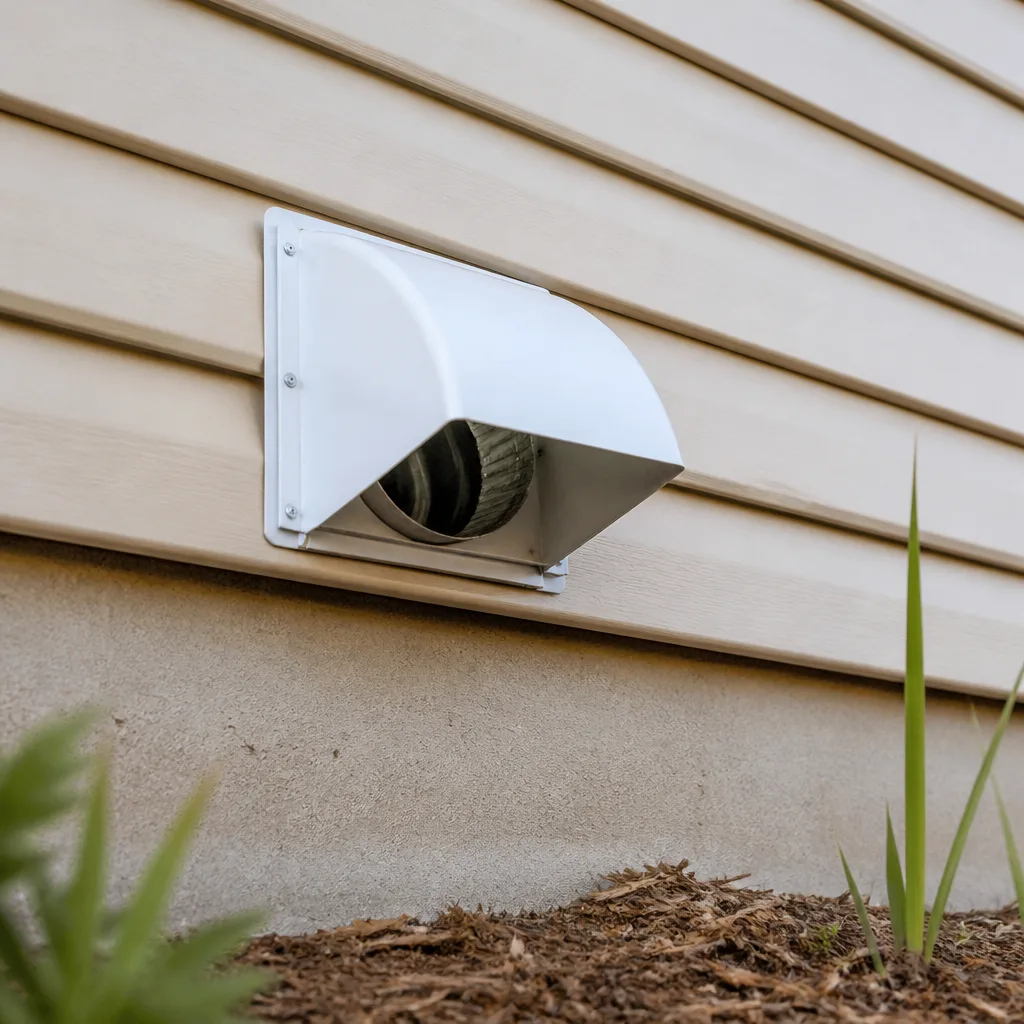 Dryer vent cleaning
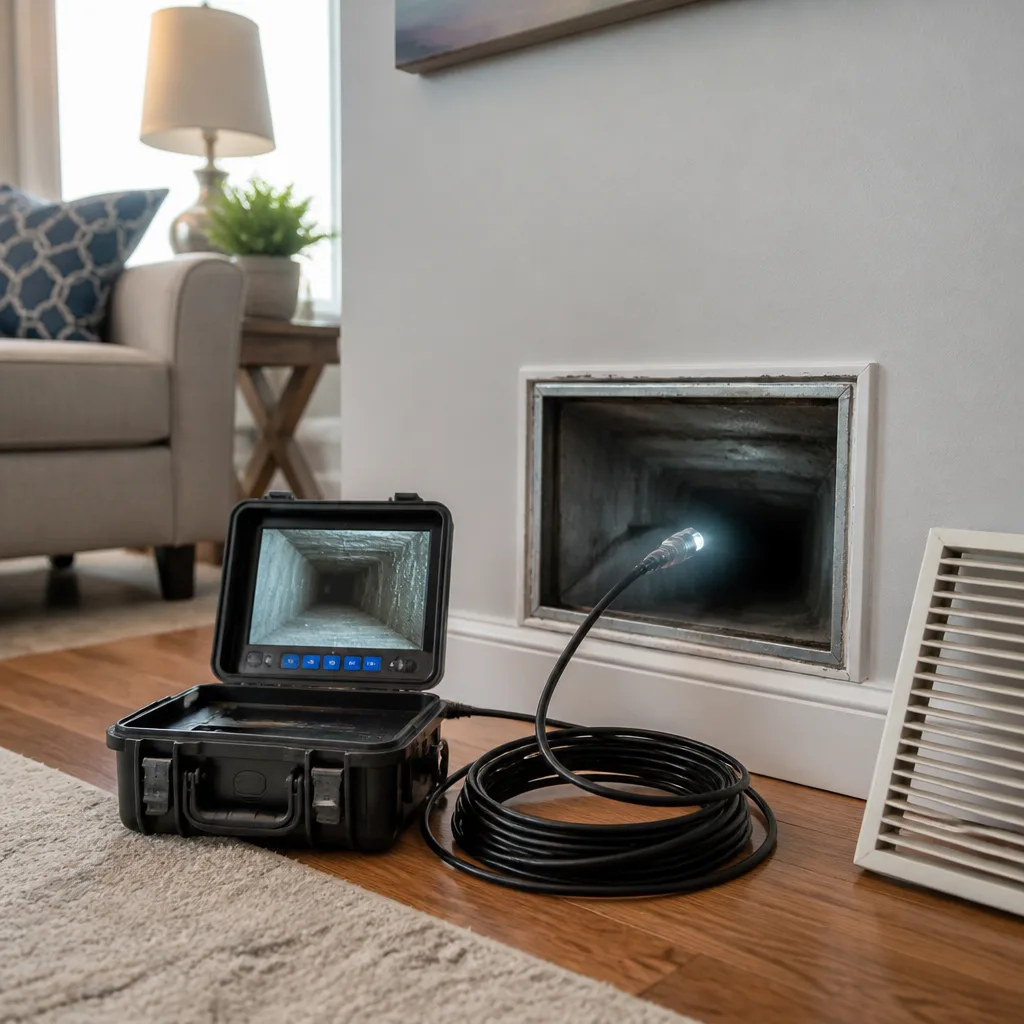 Camera inspection
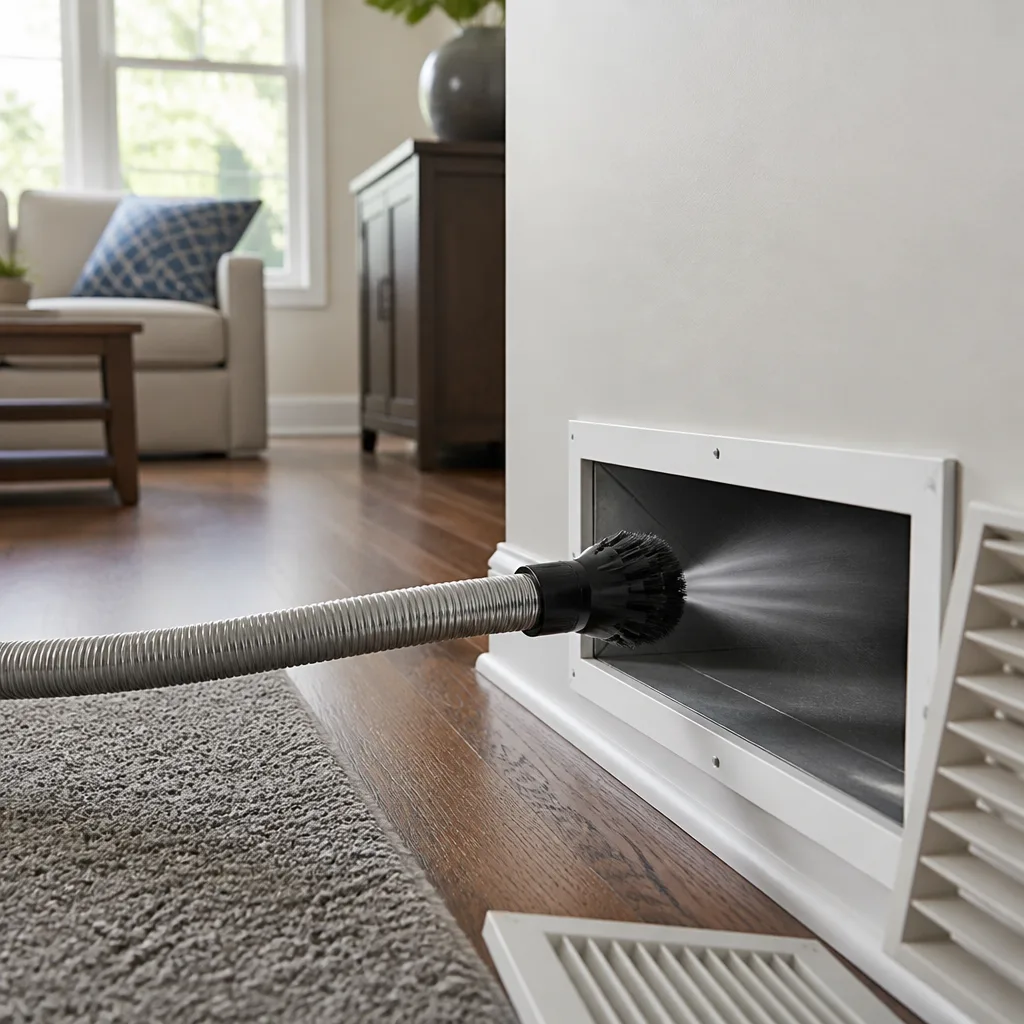 Sanitizing & deodorizing
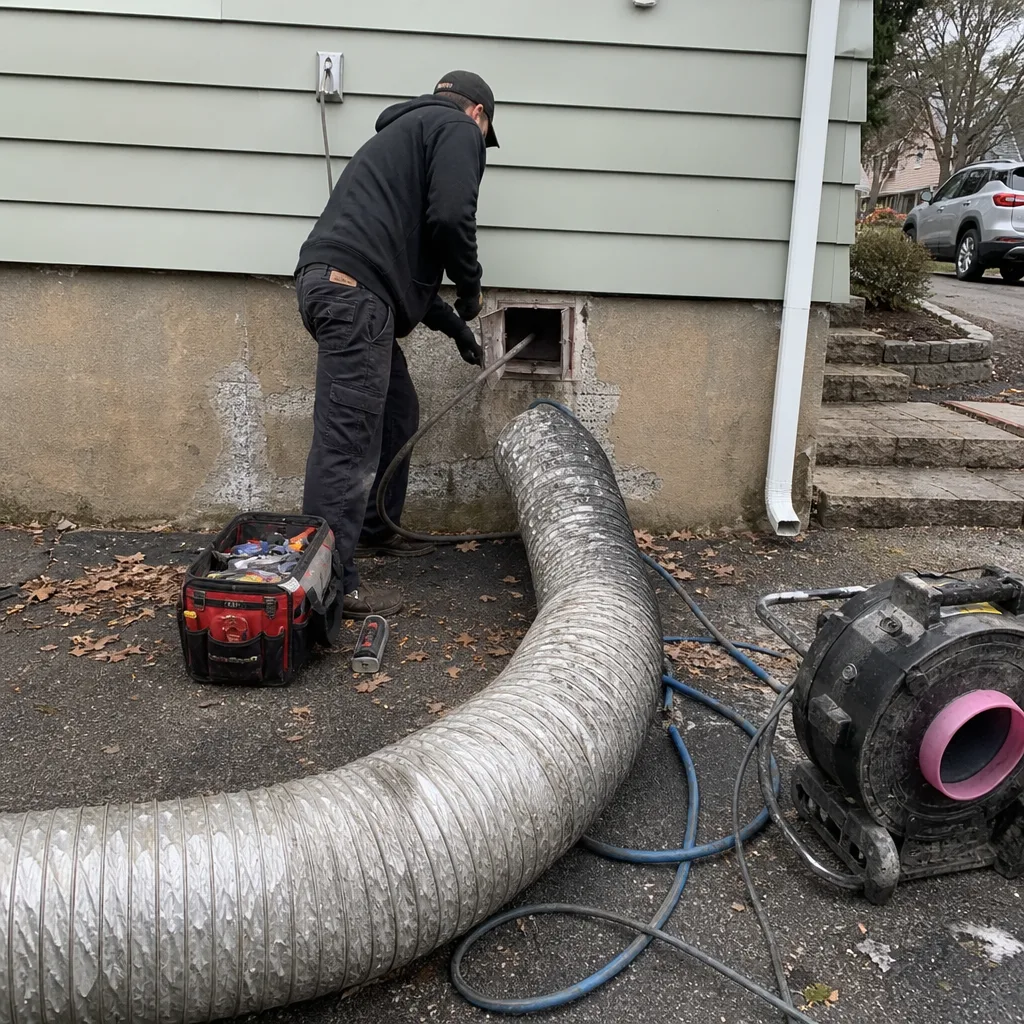
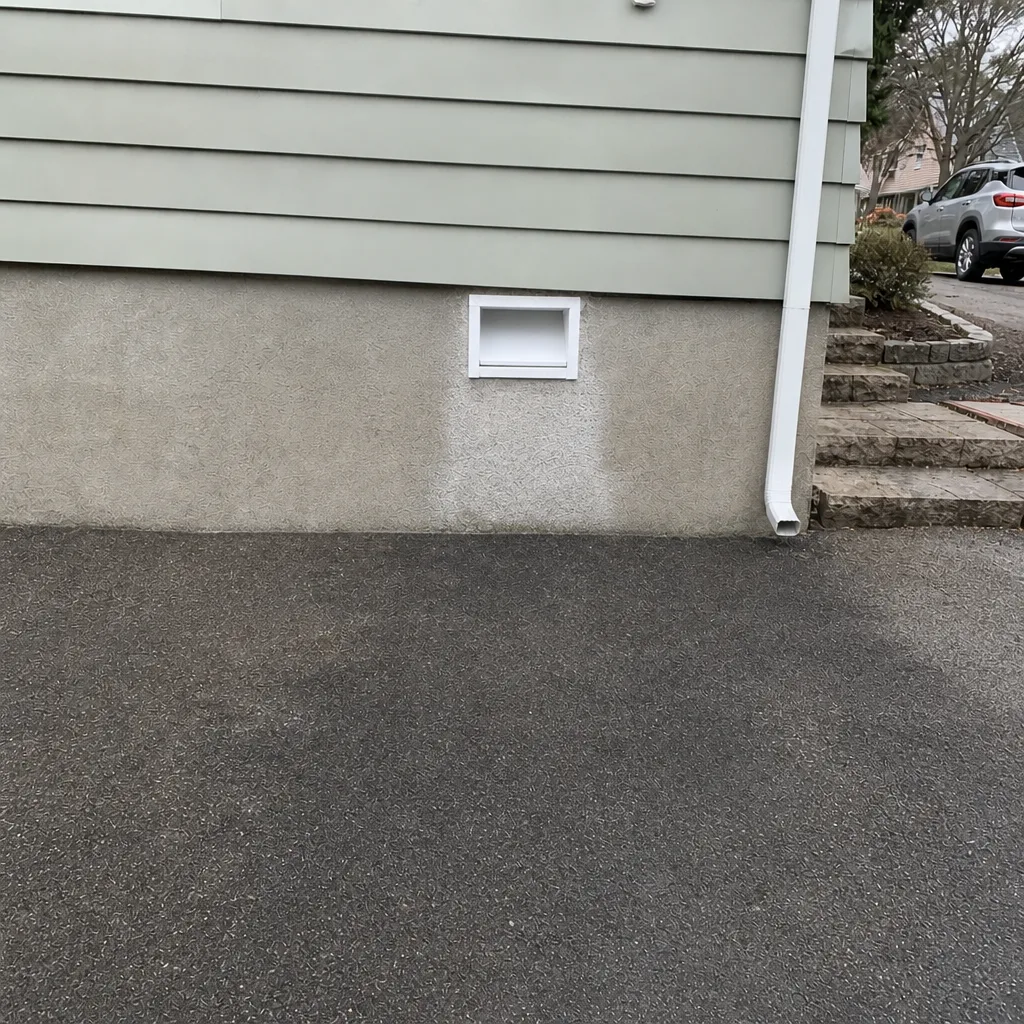
Whole-system duct and dryer vent check with before-and-after photos - you see exactly what came out of your vents
That "$99 whole-house special" is a bait ad - the real number appears once they are in your hallway, or the "clean" is a shop-vac at the register. We photograph the inside of your ducts before and after instead.
How to Hire an Air Duct Cleaning Contractor in Lynn: A Step-by-Step Guide
In Massachusetts, any company can legally call itself an air duct cleaning contractor. There’s no state license specific to this trade, and no certification is required to show up at your door with a vacuum. That puts the entire quality-control burden on you, the homeowner, and most people don’t know which questions to ask until after the work is done. This guide gives Lynn residents a practical framework: the equipment questions to ask before booking, how to spot bait-and-switch pricing, what a real written scope of work looks like, and why a generalist HVAC company treating cleaning as a package add-on usually isn’t the right call.
Quick Answer
To hire an air duct cleaning contractor in Lynn, verify three things before you book: the equipment (a truck-mounted or portable HEPA collection unit with a rotary brush system, not a shop-vac), the pricing structure (a whole-system price agreed in writing, not a per-vent teaser rate), and the written scope (which zones, which access points, and what proof of work you’ll receive). Ask for the equipment brands by name. A contractor who can’t answer that question in detail is likely subcontracting the work or using consumer-grade tools.
Styles & brands we work with
- Whole-home duct cleaning
- Dryer vent cleaning
- Camera inspection
- Sanitizing & deodorizing
Table of Contents
- Why Massachusetts Has No Duct Cleaning License, and What That Means for You
- The Equipment Questions You Should Ask Before Booking
- How to Spot Bait-and-Switch Duct Cleaning Pricing
- What NADCA Membership Actually Tells You
- Why HVAC Generalists Often Get Duct Cleaning Wrong
- What a Legitimate Written Scope of Work Should Include
- Hiring for Lynn’s Triple-Deckers and Older Housing Stock
- How to Verify the Work Was Actually Done
Why Massachusetts Has No Duct Cleaning License, and What That Means for You
Massachusetts does not issue a license for air duct cleaning. Unlike electrical work, plumbing, or gas fitting, there’s no state board that reviews duct cleaning qualifications, no exam to pass, and no license number to look up. A company with a van and a vacuum can legally advertise duct cleaning in Lynn tomorrow.
That’s not a reason to panic. It’s a reason to shift how you vet. Instead of asking “are you licensed,” which produces a meaningless yes, you ask questions that reveal whether the company has real equipment and real process. Those two things are much harder to fake than a business card.
Here’s what the lack of trade licensing means in practice:
- You can’t rely on a state database. There’s no lookup that separates a serious duct cleaning specialist from a generalist who added it to the service list last month.
- Insurance still matters. Ask for a certificate of insurance showing general liability coverage. That’s a real, verifiable document, and any established contractor should provide it without hesitation.
- Equipment brand names are your best proxy. A company using Rotobrush rotary brush systems, Nikro HEPA vacuums, or Abatement Technologies air filtration units has made a real capital investment. A company that can’t name its equipment is telling you something.
- Written scope is your contract. Since there’s no licensing body to complain to, the written scope of work becomes your only real protection. Get it before any work starts.
We’ve seen the difference between a contractor who owns professional-grade equipment and one who rents it for the day. The equipment question sorts them out fast, and it’s the first thing we recommend any Lynn homeowner ask. It’s why our own approach centers on the toolkit: the same equipment used in professional remediation, brought to every job.
The Equipment Questions You Should Ask Before Booking
The single most revealing question in this entire process is simple: what vacuum collection unit do you use, and what’s its CFM rating? CFM, or cubic feet per minute, measures how much air the collection unit moves. Higher CFM means stronger suction at the register, which matters enormously when you’re trying to pull years of accumulated dust and debris out of a duct run rather than just stir it up.
Here’s what to listen for:
Truck-mounted vs. portable units
Truck-mounted units generate far more suction than portable ones because they run off the truck’s engine, not a household circuit. They’re the gold standard for whole-house cleaning. Portable units vary widely in quality: a professional-grade portable like a Nikro HEPA rig is genuinely capable, while a consumer shop-vac is not, no matter what the technician calls it. In Lynn’s triple-deckers, where duct runs can be long and convoluted, suction at the far register is the difference between clean and “cleaned on paper.”
Rotary brush systems and contact cleaning
Suction alone doesn’t remove adhered debris from duct walls. A rotary brush system like Rotobrush physically contacts the interior surface, loosening what suction alone would leave behind. Ask whether the company uses a rotary brush, and if so, which system. If the answer is “we use a brush on a rod,” that’s a different, lesser capability.
Containment and air filtration
A serious job includes containment: negative pressure and HEPA filtration so the dust you’re removing doesn’t end up in your living room. Ask whether the company brings a HEPA air filtration unit (Abatement Technologies units are the standard in remediation work) and how it establishes negative pressure during cleaning. If the answer is vague, you’ve learned something.
Here’s the equipment checklist to run through before you book:
- What vacuum collection unit do you use, and is it truck-mounted or portable?
- What’s the CFM rating, and does it hold up across a long duct run?
- Do you use a rotary brush system, and which one?
- Do you bring a HEPA air filtration unit for containment?
- Do you use a camera to inspect before and after?
- Can you show me before-and-after photos of my own ducts when the job is done?
A contractor who answers all six with specifics is worth talking to. A contractor who deflects on two or three is a risk you don’t need to take.
How to Spot Bait-and-Switch Duct Cleaning Pricing
The $99 whole-house duct cleaning offer is the oldest trick in this trade. What it actually delivers is usually a surface-level pass: a technician runs a vacuum hose over the accessible registers, maybe blasts some air, and leaves. Source-removal cleaning, which is what you actually want, means removing the debris from the source, which takes real equipment, real time, and a real price. The gap between the teaser and the real bill is where the industry’s reputation problem lives.
Here’s how the bait-and-switch typically unfolds:
- The teaser price covers “up to” a small number of vents. Anything beyond that triggers a per-vent charge that balloons the total.
- The “inspection” finds problems. Once the technician is on site, the story shifts: your ducts are worse than expected, you need sanitizing, you need a second pass, you need this add-on. The bill climbs.
- You never see a written price before the work starts. That’s the tell. A legitimate contractor gives you a flat price for the whole system, agreed before anyone touches a register.
- There’s no proof of work. No before-and-after photos of your own ducts, no camera footage, no documentation. You’re asked to take the invoice on faith.
The alternative is straightforward: one flat price per system, agreed in writing before work starts. Not a per-vent rate, not a teaser coupon, not a price that changes on site. When we quote a job in Lynn, the number is the number, and the written estimate sets the final price.
Ask directly: “Is this a flat price for the entire system, or will it change based on what you find?” If the answer is anything other than a clear flat price, walk away.
What NADCA Membership Actually Tells You
NADCA, the National Air Duct Cleaners Association, publishes the industry’s cleaning standard. Membership is a genuine credibility signal: it means the company has committed to a standard of practice and is willing to be associated with it. It is not, however, a performance guarantee.
The distinction matters because homeowners often treat the logo as sufficient vetting. It isn’t. Membership tells you a company is aware of the standard. It doesn’t tell you whether they use equipment capable of meeting it on your specific job, whether the technician who shows up has been trained on it, or whether the cleaning will be thorough or perfunctory.
What to look for beyond the logo:
- Does the company reference the standard in conversation? A contractor who can explain source removal versus surface cleaning in their own words understands the work. One who just says “we’re NADCA certified” and moves on may be reciting a script.
- Does the equipment match the standard? The standard assumes professional-grade collection and contact cleaning equipment. A NADCA-logo van with a shop-vac inside is a contradiction.
- Does the scope of work reflect the standard? Access points, zones, containment, and post-cleaning verification should all appear in writing.
- Ask about ongoing training. Standards evolve. A company that trains its technicians regularly is more likely to be working to current practice.
Our own technicians have up to 13 years of experience, and we bring that same standard to every Lynn job. Our approach is to use professional-grade equipment and to match the standard on the actual work, not just the logo on the van.
Why HVAC Generalists Often Get Duct Cleaning Wrong
Duct cleaning looks like a natural add-on to HVAC service, and many generalist companies treat it that way. The problem is that cleaning is a different discipline with different equipment, different training, and a different skill set. When it’s sold as a package add-on, corners get cut in ways that aren’t obvious until the work is done.
The common failure modes:
- Wrong equipment. Generalists often use the same vacuum they use for coil cleaning, or a portable unit not rated for source removal. The suction isn’t there, and the results show it.
- No camera inspection capability. A specialist can show you what’s inside the duct before and after. A generalist often can’t, which means neither of you knows what the work actually accomplished.
- Training gaps. Cleaning technicians need to understand duct construction, airflow, and containment. A tech trained on furnace repair doesn’t automatically have that.
- No repair capability. Cleaning often reveals compromised ductwork: loose joints, tears, disconnected runs. A cleaning-only operation has to hand you off to a second contractor, and a generalist may not do duct repair at all.
- Cleaning as a loss leader. When the add-on exists to sell a bigger HVAC package, the cleaning itself is a marketing expense, not the product. That’s a different incentive structure than a specialist working on your ducts as the main event.
A focused specialist does three things: air duct cleaning, dryer vent cleaning, and air duct repair. That’s the whole scope. When cleaning turns up a problem, the same visit can address it.
We’re familiar with the whole-home air quality system, too. Brands like Honeywell and Aprilaire build the filtration and purification equipment that sits downstream of your ducts, and understanding how that system works means we can tell you whether your ducts are undermining your filtration, or whether an upgrade makes sense after cleaning. That’s a different conversation than a generalist can have.
What a Legitimate Written Scope of Work Should Include
Get the scope in writing before you sign anything. A real scope of work protects both of you, and it’s the only real recourse you have since there’s no licensing board to complain to. If a contractor won’t put the scope in writing, that’s your answer.
Here’s what a legitimate scope should document:
- Access points. How many registers and returns will be accessed, and whether any require cutting access holes. If access holes are needed, the scope should say who patches and restores them.
- Number of zones. A whole-system price should specify how many zones or systems the price covers. A house with two systems isn’t the same job as a house with one.
- Equipment to be used. Named equipment, including collection unit and rotary brush system. This is your insurance against a shop-vac showing up instead.
- Containment plan. How the workspace will be protected: negative pressure, HEPA filtration, floor protection.
- Post-cleaning deliverables. Before-and-after photos of your own ducts, camera inspection if applicable, and a written confirmation of what was cleaned.
- A flat price. One number for the whole system, stated in writing, with no per-vent clause and no “starting at” language.
- Repair contingencies. If the cleaning reveals damaged ductwork, does the scope cover repair, or does it need a separate agreement? Best to know in advance.
Read it before you sign. Ask questions about anything vague. A contractor who’s confident in their work will welcome the scrutiny. One who treats the scope as a formality is telling you something about how they treat the job.
Hiring for Lynn’s Triple-Deckers and Older Housing Stock
Lynn’s housing stock creates specific challenges for duct cleaning that a cookie-cutter operation won’t handle well. The city’s signature triple-deckers, along with a substantial stock of older homes, tend to have long, winding duct runs, multiple zone transitions between floors, and ductwork that’s been modified, spliced, and extended over the years.
What that means for your hire:
- Suction has to reach the far register. In a triple-decker, the run from the basement or utility area to a third-floor register can be long. A portable unit with modest CFM loses suction along the way. This is where truck-mounted or high-quality portable units matter most.
- Access is often harder than it looks. Attic runs, chase ways, and finished basement ceilings can limit where the collection unit connects. Ask the contractor how they plan to establish access before the day of the job.
- Repair capability matters more here. Older ductwork is more likely to have loose joints, disconnected runs, or torn flex duct. A specialist who can seal, patch, and restore in the same visit saves you a second contractor and a second wait.
- Zones need to be counted accurately. A triple-decker with three separate units may need three separate conversations about scope. Get clarity on which systems are being cleaned.
Our approach in Lynn is to scope the job for the building in front of us, not for a template. That’s why the flat-price conversation happens after the access and zone questions are answered, not before.
How to Verify the Work Was Actually Done
Don’t rely on your nose. The most common complaint after a past duct cleaning is that the homeowner has no idea whether anything happened. That uncertainty is fixable if you set expectations before the work starts.
Ask for these verification deliverables:
- Before-and-after photos of your own ducts. Not stock photos, not photos from a training manual. Yours.
- Camera inspection footage. If the contractor has camera capability, ask for before-and-after footage of at least one representative run.
- A written cleaning confirmation. Which systems, which zones, which registers, and what was done at each.
- A visual check you can do yourself. After the work, look inside a register with a flashlight. A cleaned duct interior should look free of heavy dust buildup. If it doesn’t, ask.
If the company can’t provide photos of your own ducts, that’s the largest red flag in this entire process. There’s no good reason a serious contractor can’t document their work. Our approach is to show you the before and after, on your ducts, before we leave.
Common Mistakes to Avoid
- Booking on price alone. The cheapest offer is usually the most expensive in the end. If a quote is dramatically below market, ask what’s missing: containment, camera inspection, source removal, or all three. In Lynn’s older housing stock, the answer is often “all three.”
- Accepting a per-vent price. A per-vent structure exists to create room for the bill to grow. Insist on a flat price for the whole system, in writing, before work starts.
- Skipping the equipment question. If you don’t know what vacuum and brush system the contractor uses, you don’t know what you’re buying. Ask, and don’t accept a vague answer.
- Hiring a generalist who added cleaning to the menu. Ask how many duct cleanings they do in a typical month and what equipment they devote to it. If the answer suggests it’s a side service, treat that as a signal.
- Forgetting the dryer vent. Dryer vent cleaning addresses a leading cause of residential house fires, and many duct cleaners ignore it or sell it as a separate add-on. Ask whether it’s included in the scope, especially if your dryer is venting through a long run.
- Not getting the scope in writing. Without a written scope, you have no way to verify what was done. No licensing board to review; no documentation, no recourse.
- Assuming a NADCA logo is enough. Membership signals awareness of the standard. It doesn’t guarantee equipment, training, or execution on your job. Ask the follow-up questions.
See the difference
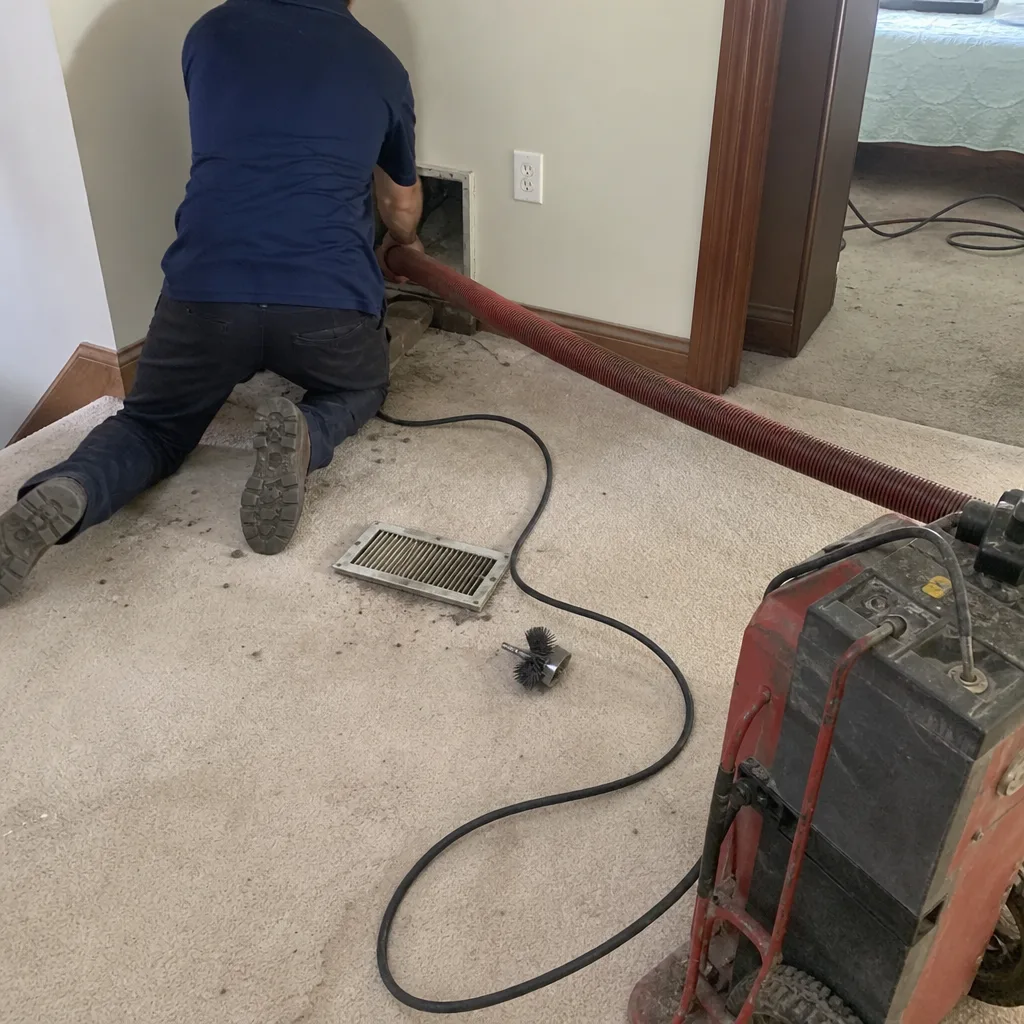 Before
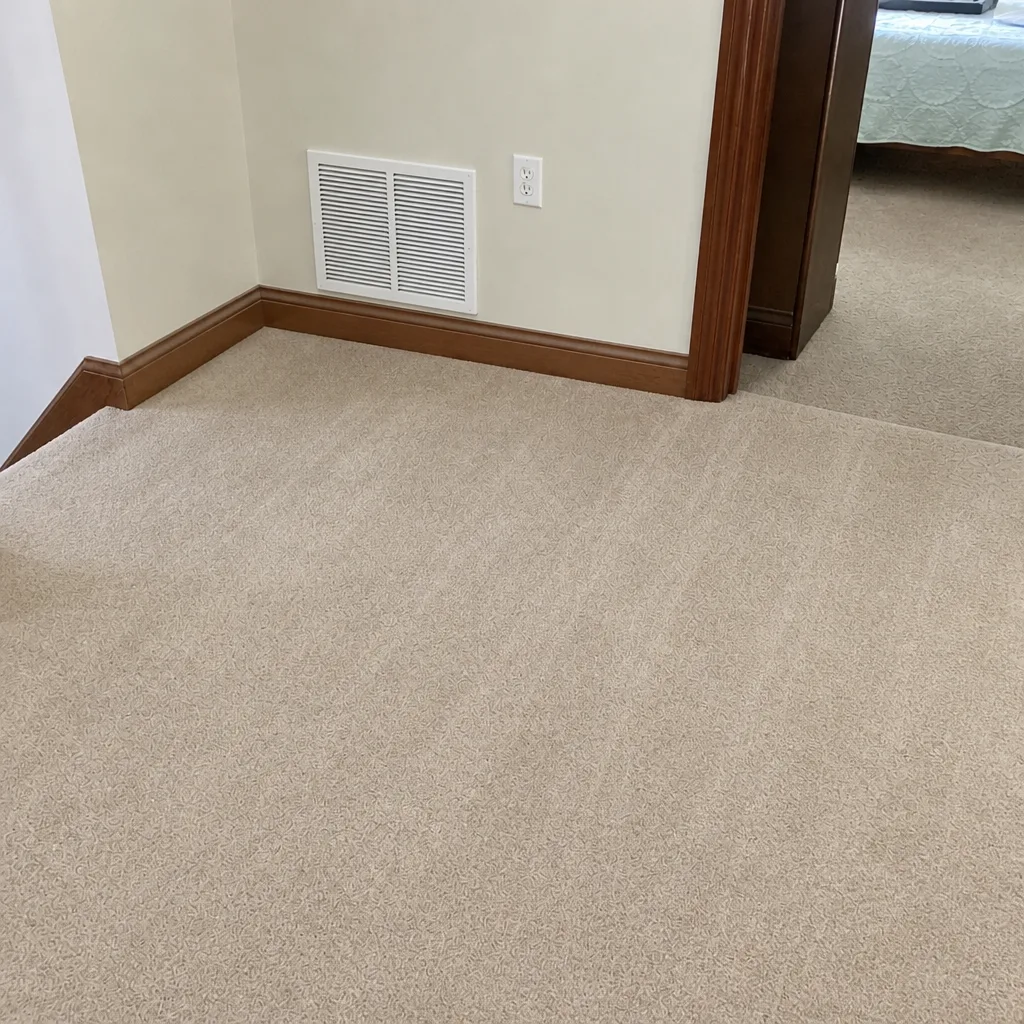 After
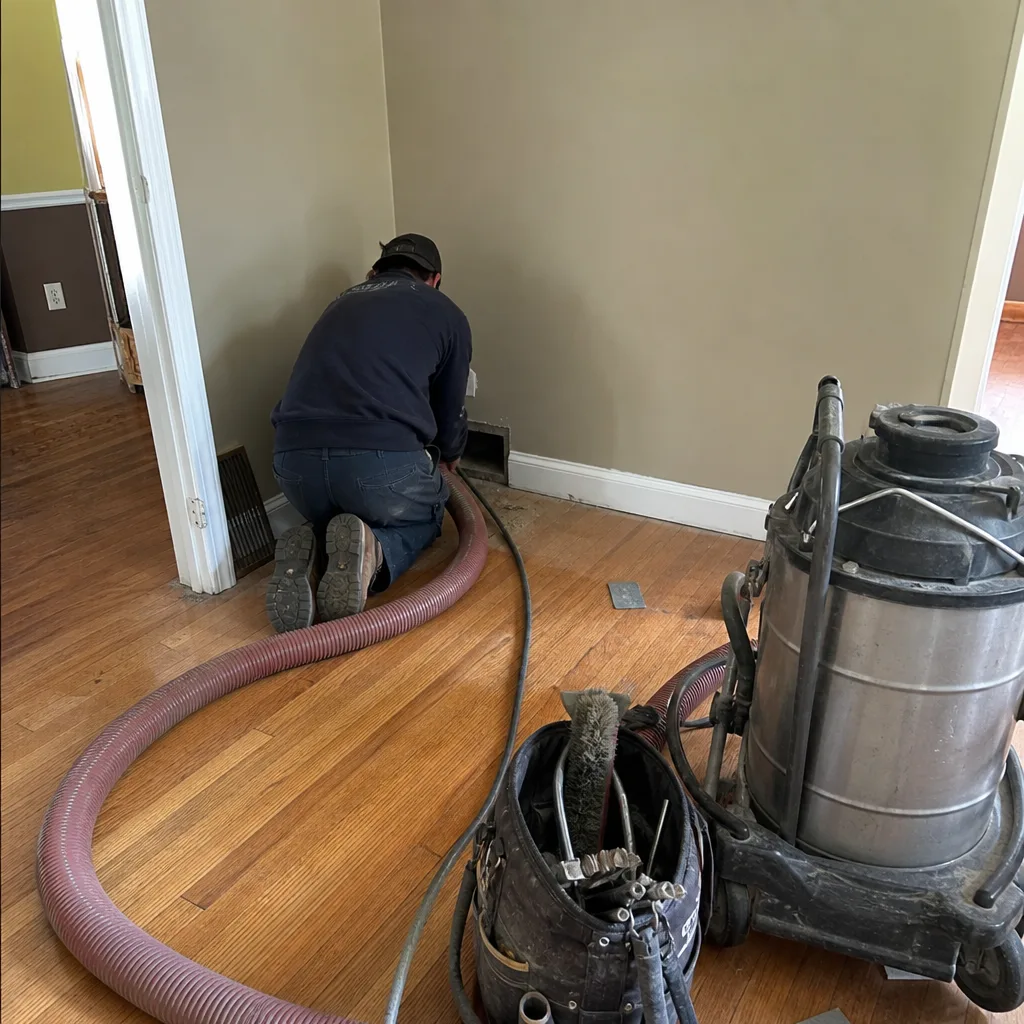 Before
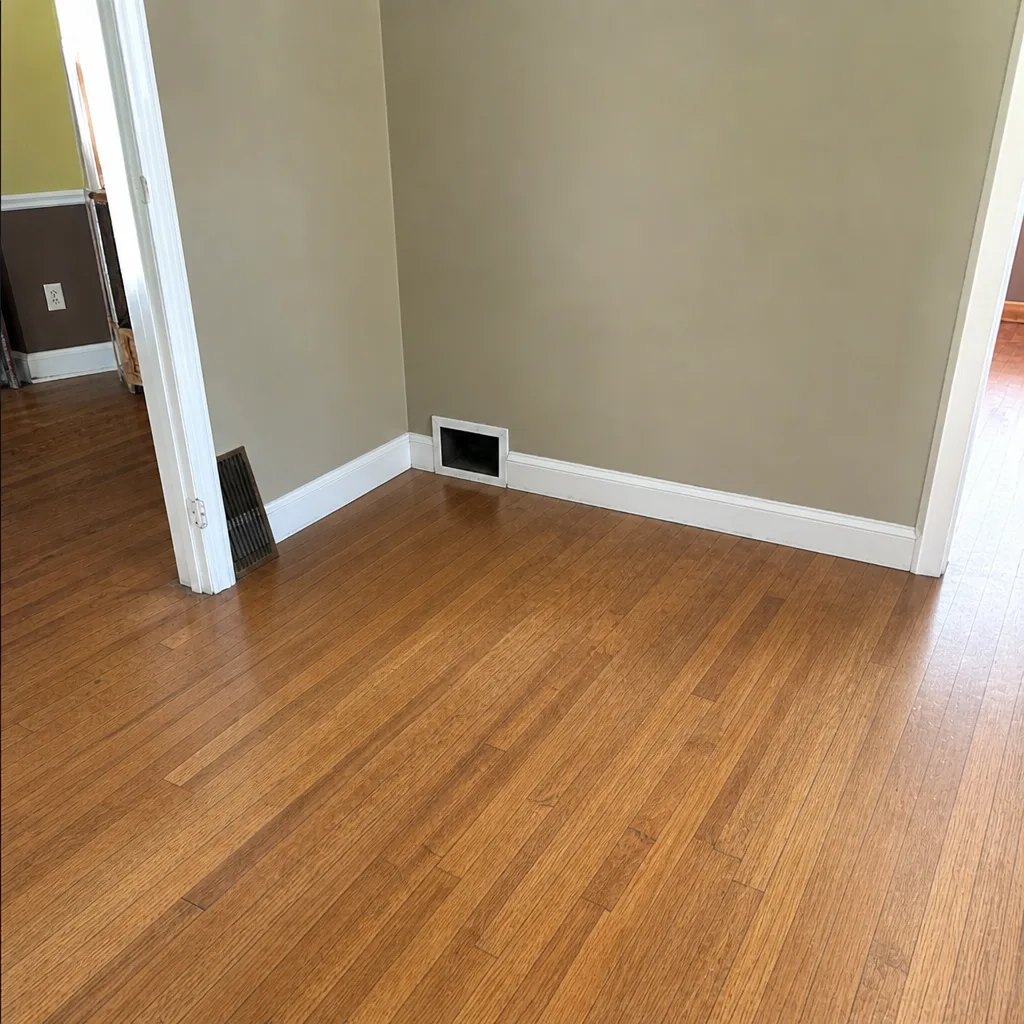 After
 Before
 After
When to Call a Professional
Some situations call for a professional cleaning rather than another round of DIY register-vacuuming. If you’re seeing visible dust plumes at registers when the system runs, if allergy symptoms flare up when the HVAC kicks on, if airflow has noticeably dropped at registers that used to feel strong, or if your ducts haven’t been touched in years, it’s time for a professional assessment. In Lynn’s older homes, renovation history, water intrusion history, or ductwork that’s been spliced and extended over the years can all make professional cleaning and repair more urgent. Duct Cleaning Lynn offers free estimates in Lynn. Call (888) 392-6109. We answer 24/7. Fast dispatch from 7am to 7pm, Sunday through Friday. For a deeper look at what a cleaning involves, see our air duct cleaning page, and for the fire-safety side of the work, our dryer vent cleaning page.
Frequently Asked Questions
Air duct cleaning in Lynn is priced per system, not per vent, and the written estimate sets the final price. Whole-system cleaning typically falls into a mid-range band that reflects the equipment, containment, and time a real job requires. Because the price is flat per system, it doesn’t change based on what the technician finds on site. Call (888) 392-6109 for a free estimate. We answer 24/7. Fast dispatch from 7am to 7pm, Sunday through Friday.
Low quotes usually reflect a lower scope: less suction, no containment, no camera inspection, no source removal. The teaser price buys a surface pass, and the bill grows on site through per-vent charges and add-ons. A flat price from a contractor using professional-grade equipment is the honest alternative. Call (888) 392-6109 for a written estimate. We answer 24/7. Fast dispatch from 7am to 7pm, Sunday through Friday.
Ask for before-and-after photos of your own ducts and a written confirmation of which zones and registers were cleaned. A camera inspection of at least one representative run adds another layer of proof. If a contractor can’t document the work, that’s the largest red flag in the process. Call (888) 392-6109 with questions. We answer 24/7. Fast dispatch from 7am to 7pm, Sunday through Friday.
Most homes don’t need annual duct cleaning. A common guideline is every few years for a typical home, and more often if you have pets, recent renovation, or water intrusion. The honest answer is that it depends on your specific ducts, not on a fixed calendar. Call (888) 392-6109 for a free assessment. We answer 24/7. Fast dispatch from 7am to 7pm, Sunday through Friday.
No. Massachusetts doesn’t issue a license specific to duct cleaning, which means vetting is on you. Ask about equipment, written scope, insurance, and proof of work rather than a license number. A contractor confident in their work will welcome those questions. Call (888) 392-6109 to talk through your job. We answer 24/7. Fast dispatch from 7am to 7pm, Sunday through Friday.
Yes. Each system is scoped separately, with a flat price per system agreed in writing before work starts. The access and zone questions get answered first, because long runs and finished ceilings change what the job involves. Call (888) 392-6109 for a free estimate on your building. We answer 24/7. Fast dispatch from 7am to 7pm, Sunday through Friday.
The Bottom Line
Hiring an air duct cleaning contractor in Lynn comes down to three things: equipment, pricing structure, and written scope. Ask for the equipment brands by name. Insist on a flat per-system price in writing, not a per-vent teaser. Get a written scope that documents access, zones, containment, and post-cleaning deliverables. NADCA membership is a useful signal but not a substitute for the follow-up questions. Generalists treating cleaning as an add-on are worth a skeptical second look, especially in Lynn’s older housing stock, where repair capability matters. Get the proof: before-and-after photos of your own ducts. That’s the whole framework, and it works.
Ready to talk through your job? Call (888) 392-6109 for a free estimate. We answer 24/7. Fast dispatch from 7am to 7pm, Sunday through Friday. You can also start with our Duct Cleaning Lynn page for the overview, and we’ll scope your system from there.
Written by the team at Duct Cleaning Lynn.